Climate, COVID, and Conflict: An Interview with Vanessa Hua by Ethan Lam
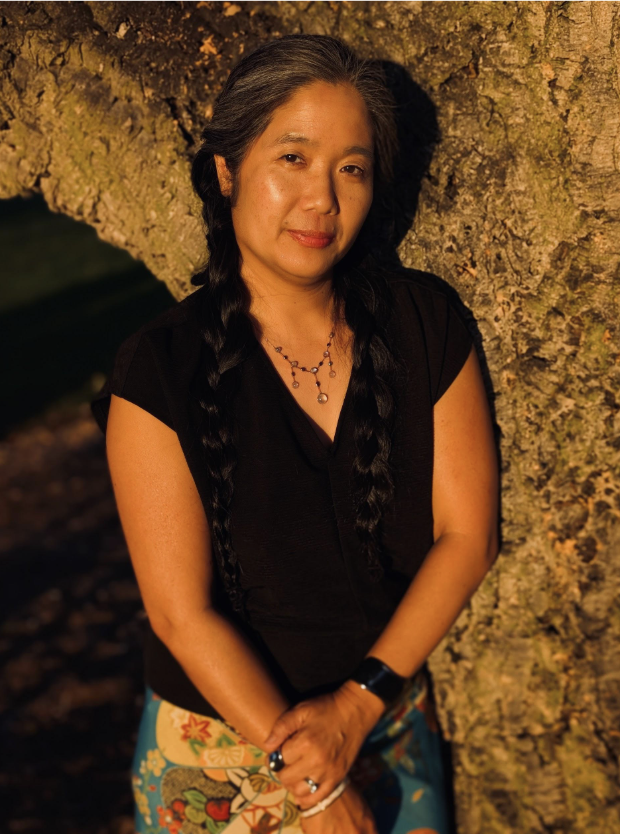
Some weeks ago, as I was perusing the archive of Split Lip Magazine in hopes that I might find a piece with an interesting setting, I fortunately found Vanessa Hua’s flash fiction “Forecast.” I appreciated how she characterized the weather—yes, something as mundane as fog can be dynamic as well. As you can imagine, I was very pleased to learn that I would have the opportunity to interview Vanessa herself. The timing could not have been more fortuitous—the occasion for this interview being the release of her novel, Coyoteland, this week.
Vanessa Hua is the author of the national bestsellers A River of Stars and Forbidden City, as well as the story collection Deceit and Other Possibilities, a NYT Editors’ Pick. A National Endowment for the Arts Literature Fellow, she has also received a Rona Jaffe Foundation Writers’ Award, the Asian/Pacific American Award for Literature, a California Arts Council Fellowship, and a Steinbeck Fellowship in Creative Writing. Previously, she was an award-winning columnist for the San Francisco Chronicle. She has filed stories from China, Burma, South Korea, Ecuador, and Panama, and her work has appeared in publications including The New York Times, The Washington Post, and The Atlantic. She teaches at the Warren Wilson MFA Program, Sewanee Writers Conference, and elsewhere. Her novel, Coyoteland, and her book of narrative nonfiction, Uprooted, are forthcoming.
I had a conversation with her over email about her extensive writing career, her flash fiction piece, and, of course, Coyoteland.
Ethan Lam: You’re quite a prolific and accomplished writer. You’ve worked for the Los Angeles Times, were a columnist for the San Francisco Chronicle, and now are writing novels. How have you evolved as a writer? Do you have a favorite genre to write in?
Vanessa Hua: I don’t have a favorite genre; that’s like asking me to pick my favorite child! My earliest dreams [throughout] childhood were to publish a book of fiction. But in college, I grew to love journalism; I could follow my curiosity. My fiction builds upon my journalism. I can write daily and on a deadline, and I’m open to being edited and collaborating with others. My fiction has improved my journalism, because I’m more likely to think about character, about setting, and the narrative movement of a piece, rather than just stringing together quotes. In either genre, I strive to shine a light on untold stories that might inspire a change in thinking and a change in action. I’m excited that my debut book of narrative nonfiction, Uprooted—about foraging, midlife, and caregiving—will be published in Spring 2027 by Tin House.
EL: I hear you have a particular interest in writing about the Asian diaspora. What does it mean to you, and what do you wish more people knew about this topic?
VH: I am the American-born daughter of Chinese immigrants; my parents came to this country to attend graduate school in science and engineering. I am inspired by their courage and daring, by their dreams of a different life, and that drives my curiosity about diasporas of all kinds. Whenever I travel, I search out Chinatowns: Kolkata, Panama, Mexico City, and more, exploring how they adapt tradition and adopt new ones.
EL: Out of all the Chinatowns you have visited around the world, which one was your favorite and why?
VH: I can't pick one! Wherever I go, when I smell familiar dried herbs and hear the familiar intonations, I feel instantly at home.
EL: Your microfiction “Forecast,” first published in Split Lip Magazine, was featured in the 2025 Best Microfiction anthology. How you described the fog as “dropping down to swaddle but also to erase” was especially memorable. Could you tell us more about what you meant by this?
VH: Fog is liminal. In that in-between space, it can have a cozy quality, like a blanket tucking us in, but simultaneously seem menacing because of how it can blank out everything.
EL: I remember you mentioning Ocean Beach, which is a great spot to see the San Francisco fog. Have you visited Ocean Beach, and did this inspire your writing? What feelings, if any, does fog elicit from you?
VH: I grew up in the East Bay and live there now. In my twenties, I lived in San Francisco. In both places, I loved watching the fog pour over the hills. It’s a part of the landscape, our local identity, and I was deeply disturbed when I heard that fog could disappear due to climate change. Ocean Beach is a beautiful, windswept spot that feels like it’s at the edge of the continent. It’s wild and beautiful, but also the kind of place you should never turn your back on.
EL: Your new novel, Coyoteland, is also set in the Bay Area (I appreciate the reference to Berkeley). What do you love the most about the Bay Area, and why did you choose this setting for your novel?
VH: The Bay Area is both a landing pad and a jumping-off point—a dynamic and ever-changing place far more interesting than what familiar stereotypes might suggest. The access to nature also shaped my experience—and the experience of characters—in the pandemic and its aftermath; far different than those who were trapped inside for most hours of the day. Wildfire season also plays a role in the novel; in my fiction, I’ve tried to reckon with climate change, whether in my novel or my flash fiction.
EL: The braided narrative weaves together the stories of Jane, Tasha, and Ana, who come from different racial backgrounds. How does the story navigate interracial tension?
VH: The four families in the novel—the Belles, the Washingtons, the Rodriguezes, and the Changs—clash over matters of race and class. But they also share a will to survive, to resist, to fight. To make a better life for their family. To hold their children close. I wanted to explode the Black-white binary of race relations in this country and subvert the Model Minority myth. However, I didn’t want to be didactic. First and foremost, these are characters in difficult circumstances, trying to find a way through.
EL: This novel is set during the COVID-19 pandemic. How do you think your audience will receive this topic in 2026? Or, were you thinking about how they would receive it as you wrote? Did the way you look at the pandemic change as you drafted the book?
VH: There were novels set during the early months of lockdown, featuring characters who hid themselves away. This novel is set a year and a half later, which I found to be a fascinating inflection point: would our country change for the better, return to where we’d been, or would the pendulum swing even farther back? We have since witnessed how that has played out. If the novel had somehow come out in 2021—as I was writing it—readers might have said “Enough!” In 2026, we have greater hindsight and hopefully greater interest.
EL: While writing Coyoteland, were there parts that you had to omit reluctantly?
VH: In an earlier draft, I included a subplot about the school district going after the nanny for alleged residency fraud. There was a nosy PI trailing her, which is an actual practice of districts. Ultimately, I dropped it—too much going on. I didn’t omit reluctantly, though. With drafts, there will be dead-ends and wrong turns, and cutting is a part of the process.
–
Ethan Lam is an undergraduate currently pursuing English at the University of California, Berkeley. He works as an intern for Split Lip, writing short stories and poetry in his spare time. Beyond writing, he is a calisthenics athlete.