
It’s Human to Want to be Seen: An Interview with Daniel Garcia by Bianca Sandoval
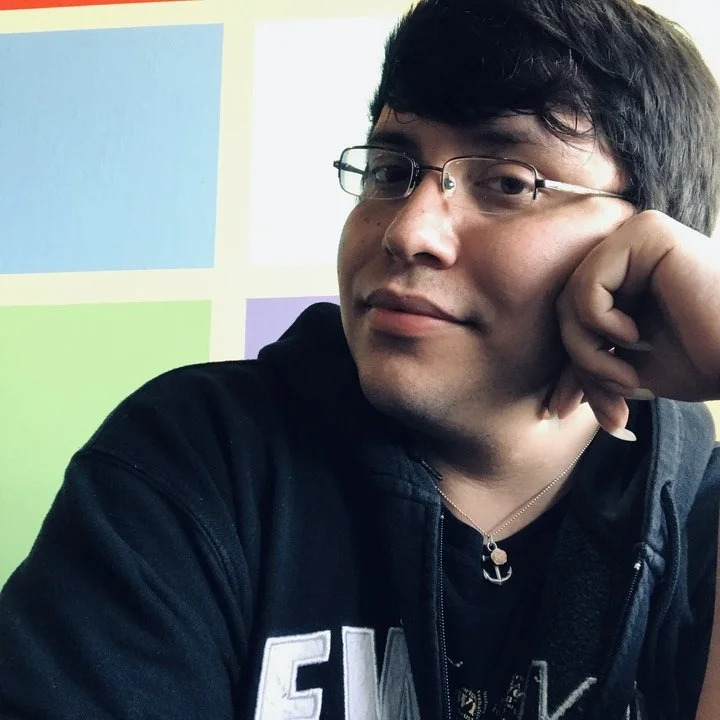
When I first got the offer to interview Daniel, I jumped at the opportunity and made it my mission to read as much of Daniel’s work as possible. Right off the bat, Daniel’s essay “Promise Me You Won’t Tell,” published by Passages North, spoke to me on such a level that I did not know was possible. You know that feeling you get when you’re reading something that resonates with you immediately, like something just clicks? That’s exactly what happened when I read (and reread) this piece. Everything from the prose to the structure of the essay tickled my senses in the best way possible. From here, I knew I had to learn more about Daniel’s writing process, and I grew even more excited at the prospect of getting to ask questions about Daniel’s editorial process as well.
Daniel Garcia is a writer, educator, and editor, and has been published in quite a few publications, such as Guernica, Michigan Quarterly Review, Passages North, Quarterly West, Shenandoah, The Kenyon Review, and elsewhere. Daniel started at Split Lip in 2019 as a reader for the memoir team and in 2021 transitioned to being the InteR/e/views Editor, editing book reviews and author interviews. In July 2024, Daniel became Micro Editor for The Offing; here, Daniel edits extremely short writing (poetry, essays, and fiction under 560 characters).
Daniel and I chatted over email about being a library kid, poems and prose, the liberation of the braided essay, and how working the night shift makes writing possible. We also touched on the amazing award Daniel won this year!
Bianca Sandoval: Recently, you won Lambda Literary’s 2025 Denneny Award for Editorial Excellence—how did that make you feel? What was the first emotion that struck you? I would love to hear about your honest reaction!
Daniel Garcia: Honestly, the first emotion that found me was shock. Getting the news about the Denneny Award was the first time I’d ever been called to hear I’d won anything. I can’t remember much from that day, but I definitely remember seeing the phone number flash up on my phone screen one weekend morning, and I thought it was just a spam call. I didn’t think anything of it, so I let the phone ring. Then I got the notification of a voicemail, and when I went to listen, I was totally stunned. I called back, frantic, and when L.D. Lewis, the staff member from Lambda Literary who’d left the initial voicemail, retold the news to me, the shock lifted. I thanked them and Lambda for the work they do to support queer people and for having me be in community with them. I thanked them for helping me pay my rent. I said, at the time, “I feel so possible.” My hands were over my heart while I stood in my bedroom next to my white dresser drawer with all the stuffed animals (gifts, mostly) I kept atop it. Gratitude was coming out of my eyes, and it was as if my heart might sprout wings and take off from me.
Nowadays, the gratitude I have around the award is still there, of course, but there’s also this small sense of awe I have around it—you don’t really see many awards out there that are specifically for editors, and even fewer that are geared towards queer editors. Anyone that knows me knows that I’m all for self-affirmation and knowing your value and loving and celebrating yourself first, but sometimes external validation can be really helpful and healthy too, especially from an organization like Lambda Literary, that has been good to me over the years. It’s human to want to be seen and affirmed and witnessed. It is and has been such a lovely feeling to get that sort of recognition.
BS: What inspired you to start writing in the first place? Was there a pivotal moment in your life where you felt you needed an outlet to express yourself?
DG: You know, I almost wish I could say I had a traditional answer—that there was a teacher who saw something in me, or that I went to some prestigious university that was funded and resourced and antiracist. If anything, I had something of a difficult upbringing, and, when things were more stable for me, I was really fortunate to be a library kid, checking out stacks of books and returning them and accruing the occasional late fee. I’ve been writing for as long as I can recall, sketching out poems and stories of characters from entertainment franchises that I’d seen as a kid and from my own imagination, but it was really my relationship with books and reading that shaped me the most in becoming a writer. For me, books were less of an escape from the world as much as they were a way for me to expand the one I was in; it was never that I became part of the landscapes of the characters in the books I immersed in, but that they became part of mine, which is really just a way of saying that books—and more specifically, language itself—was a method towards mending my aches. Not a distraction from them, but a kind of medicine, I suppose. A way to bridge the gap between mind and body. An example of being a person when my life did not provide me with any.
The other thing is, I don’t know that I see writing as an outlet to express myself; at least, not in the colloquial way we talk about outlets—that is, as a means to cope with the world or our circumstances or to assist in talking about difficult things. There’s a very medical/therapeutic context that exists around the notion of writing as an outlet, one that I’ve never really been able to see myself in (which I suspect is because I’m a brown person, and that such contexts have their own further, underlying racialized contexts). Don’t get me wrong, writing is helpful for me in that it lengthens my wingspan in my understanding (or lack thereof) around something, but writing has never really felt cathartic to me in the way we think of outlets. If anything, writing brings me a sense of accomplishment and satisfaction in carrying out what I’ve set out to do, which is usually to make something exist on top of this planet outside of my own thoughts.
BS: Seeing as you write both poetry and prose, where do you get your inspiration from? Since these are two different mediums of writing, do you find either one more difficult and/or enjoyable to write?
DG: Much of my inspiration comes from the mirror, if I’m being blunt. If someone gets something out of my writing or if it puts me in connection with other people who see the world in a similar (or different!) way, then I think that’s lovely. But most of what I do as a writer builds outward from me as the center first. I know how individually-driven that sounds, so let me be clear: I do what I do for myself, yes, but I also write towards the public, which I consider to be those with whom I find myself in a vital, reciprocal relationship. More often than not, that’s brown people, and more specifically, brown queer/non-cis people.
Poems and prose are equally challenging and rewarding. The expansive and footless wandering that prose allows me is breathtaking, and the distillation, precision, and focus that poems offer are equally so in their own ways. Really though, it’s where the two blur into one another where I feel most possible as a writer. I’m endlessly fascinated by prose poems, by lyric essays and lyrical fragmentation, hybridity. I dream about image- and text-based work, ekphrastic writing, and enjambment. I dream about these things, about poems and prose, much in the way I dream of the moon—some fleeting entity I’ve waited a long time to find me, to take shape, to cohere into something legible; and to then come closer, and then closer still, and then fleeting again; gone.
BS: What do you value most about being able to write both poetry and prose?
DG: For as much as I love how malleable poems and prose are, I do love their rigidity too. I speak a little bit on this for an essay-esque review thingie I did for the Magazine, but, putting it plainly, there are just things I can’t say sometimes in essays (my primary avenue of prose writing) that I can say in poems and vice versa. There are pieces of writing that escape me unless I think of them in stanzas and enjambment, and others that are inaccessible to me if I don’t think of them in paragraphs and leaps of association on the page, and others still that I can’t reach if I don’t see them through the lens of fragmentation or hybridity. I love that my syntactical movements can’t be confined to a single mode of creative expression.
BS: As an editor, how do you go about establishing a solid connection with the writer? What do you prioritize in doing so?
DG: The first thing I do in connecting with a writer is the first step any editor makes: I read. I make myself a student of the work in front of me: I read the piece silently and then sometimes aloud. I take note of the phrases that hold my attention and the ones where I’m less engaged. I reread. Questions are crucial for me: I ask myself what sort of edits would a piece need? Would it need compression/syntactical edits? Or would it maybe benefit from some expansion? And if so, how much? Do I like a piece because it’s doing something electric and invigorating with language in a way that appeals to me? Or do I think this is a promising draft that could benefit from some general revision? Some pieces are total home runs that easily pull an acceptance out of me, but more often than not, especially if I’m torn on whether to send an acceptance or not, I ask myself: If I had to publish this piece tomorrow, would I be okay with running it as is? If that answer is yes, it’s likely that I’ll move forward with sending a writer an acceptance. If that answer is no, I’m likelier to send a rejection.
Once an acceptance happens and I’m in the actual back-and-forth editing with a writer, I make things clear from the jump—that my suggestions are just that, suggestions for where I think the writer’s language can be elevated and where they can dig deeper and synthesize what’s already on the page. I also, in my suggestions, will leave comments for them to consider and respond to. This way, things feel more like a dialogue and not just a bunch of track changes and red lines on their piece; they’re also a way for me to explain my own rationale to a writer, for them to see what I’m seeing. Above all else, I try to make it as clear as possible that I’m simply here to edit their work and that I’m also open to hearing their suggestions and thoughts. I find that the more collaborative things are, the more rewarding the editorial process is for all parties involved.
BS: How do you approach editing a piece? Is there a specific method you use?
DG: My approach to editing a piece really depends on what I think it might benefit from. There isn’t a specific method that I can lay out, other than that the comments option in Microsoft Word is particularly helpful for me. Sometimes, simple compression edits are all that’s needed, especially if I’m working with, say, an interview. If I’m editing a poem, I might move things around on the page to play with pacing or enjambment. What’s most important for me in how I arrive at a piece is that I’m making sure I don’t seem prescriptive in my editorial suggestions and that I’m both doing what I can to honor a writer’s intended vision for their piece as closely as I can, and communicating that intent clearly so a writer understands where I’m coming from. The work of an editor is to edit, not overtake or overstep.
BS: What would you say is the hardest part of being both a writer and editor? Alternatively, what is your favorite part?
DG: As an editor, I’d say my favorite part is platforming and putting money in the hands of writers, hands down. I say this in the interview I had with Lambda Literary when I received the Denneny Award, but these days it’s really hard to make a sustained income off of your writing. The magazines I work for aren’t able to give the writers and artists they publish a whole lot of money, but I know how far a simple honorarium from a magazine can go. Some of the most successful, talented writers I know rely on institutions like academia or day jobs to support themselves too. I’m one of those people. Many times in the past, I’ve put mag money towards my rent or buying groceries. Don’t get me wrong, I’m not knocking magazines that aren’t able to pay their contributors—editing and running a magazine is, for many of us, myself included, a labor of love—but it matters to me that, especially in a time where most citizens are a medical emergency away from destitution, the literary outlets I edit for put money directly in the hands of the people. As far as being a writer goes, the satisfaction and sense of accomplishment and spiritual nourishment I get from creating something is next to incomparable for me. I kind of see being a writer and editor as a set of television shows, and my favorite thing between them both is seeing how often and smoothly they have crossover episodes. They both have their own premises and objectives and whatnot, but they can and do live in the same universe from time to time.
I wish I had a more thoughtful answer, but the admin work and the dedication required for both writing and editing is the hardest part for me sometimes. Don’t get me wrong, I love what I do in both hemispheres, but sometimes (often) it’s a struggle getting out of my own way and having to work with my brain to get my body to assist me in doing what I need it to do, because there are people who are counting on me to do things like get their return edits to them and to coordinate publication agreements and whatnot. Like, what do you mean I have to sit down in front of the page in order to actually write? What do you mean I can’t just think my thoughts out onto my computer? The funniest part is that, like so many other writers, once I’ve done the thing (replying to a contributor’s email on when their work is scheduled to come out, sending an online proof over, etc.), I often feel more energized, lighter. I remember why I do what I do.
BS: I recently read your piece, “Promise Me You Won’t Tell,” where you talked about a lot of sensitive topics. I really admired the emotion you expressed, and it resonated with me so much to the point where I found myself reading it all over again. Would you be able to describe your experience writing this piece? As a reader, I found the non-linear structure really fascinating—how did you want the format or structure of the piece to impact the reading experience?
DG: It’s hard to remember now what it felt like to write this one, beyond that it was a grueling experience. I don’t necessarily mean in an emotional sense, although that could be a little untrue—I might’ve used the word “brutal” at one point to describe it when I initially shared it on social media. It was a grueling experience because, like most of my earlier pieces of longform creative nonfiction, it took me about two or so years just to get this essay from the page to publication. And even then, after the lovely folks at Passages North accepted my essay for publication, I was still doing edits, making small changes here and there, rearranging things, condensing and expanding. I say this in the essay, but this was one of the more sad experiences I’ve had with trauma, and in some ways that’s still true. Sometimes I’m there again, in that old dorm room from college, and sometimes (most times, really) this essay and its occasion are so far in my rearview that it feels like a different life. I ultimately think this is a good thing. Don’t get me wrong, I take who I was then with me wherever I go, but the ache doesn’t have as much of a hold on me as it once did. It’s lessened with time and care and therapy and rest.
If memory serves, I’d tried writing “Promise” maybe two years after the present events detailed in it had occurred—I’ve always had the desire as a writer to preserve how I’d felt about something in the aftermath of it, which is great for personal archival purposes, but maybe perhaps not the most conducive towards gleaning the necessary time and distance required for a successful memoir essay, you know? But I couldn’t write the essay right away, badly as I wanted to, not because the material was difficult to work with, but because I didn’t have enough distance from it; there was no possible sort of reflection I could’ve done. There was no insight I could’ve found then; I needed the two years to even start writing it. And then I needed the two years after that to bring the essay to a place of publication.
As far as the structure for “Promise” goes, I’d written it in a time where braided and segmented essays had reached a sort of saturation point in the contemporary literary landscape. Everyone who was publishing essays in magazines, from what I could see, was doing braided essays, lyric essays, enumerated essays. Essay writing had always been difficult for me in grade school, mostly because I sucked at transitions and couldn’t quite figure out how to get multiple ideas to cohere from paragraph to paragraph. When I discovered lyric, braided, and segmented essays in college, it was absolutely life-changing for me as a writer. It never occurred to me that I didn’t have to have transitional phrases or an airtight argument that hinged solely on a Through the use of ethos, pathos, and logos, [author’s name] effectively shows the reader how… type of thesis. Braided essays were an incredibly accessible form for me as a young writer, and it was liberating to know that I could just put a couple asterisks between sections and tie things together as I went along. I could trust the reader to come to the realizations I was making in my proverbial leaps across white space.
And so, the form for “Promise” was in part predicated upon the ease of access that writing in a braided form could offer me, but it was also the only structure available to me on how to write about that experience; writing in short, separated bursts was all I had to make my thoughts cohere. Which then was, by proxy, a loose extended metaphor for the sort of person I’d been at that time in my life, during that experience of trauma and recovery—fragmentary, invented, in pieces.
BS: How do you handle editing for Split Lip and The Offing simultaneously, apart from also being a writer yourself? I would be curious to know about your work-life balance as well!
DG: I handle editing for Split Lip and The Offing the way I do most things: carefully and with frequent breaks (lol). I make to-do lists that don’t help me with a damn thing, but I like to pretend it gives me a simulacrum of order. My work as an editor is really good for me in that it gives me something to do without having to devote exclusively to writing while still being diversified in what said editorial work requires of me. The work I do for each magazine, all the way down to the website platforms that each one uses to receive submissions, is completely different. They engage different parts of my artistic practice and my brain.
At Split Lip, I mostly publish book reviews and author interviews for the InteR/e/views department—a portmanteau of Interviews and Reviews; very cute, no?—and so whenever I’m doing my work here, I’m thinking with the part of my brain that deals in artistic analysis and literary criticism. And even within that, how I approach editing a book review and an interview are totally different. At The Offing, I publish extremely short-form writing (under 560 characters, including spaces!); I publish short stories and poems and essays and the occasional piece of fragmentation and/or hybridity. That engages the part of my brain that is also a creative writer, the part obsessed with syntax and detail.
The other thing is, if that wasn’t challenging enough, there’s also the part of my life where I’m regrettably forced to be a productive member of society; this means I work a day job. However, this day job is one I work overnights, which royally sucks for obvious reasons (my sleep schedule, the rest of the world operates diurnally, etc.), but is also really dope in that it isn’t a physically intensive job, and thus gives me a lot of free time to work on my writing or editing during my shift. When I was working a regular 9-to-5 (back when I wasn’t yet an editor), the only real free time I had to work on writing was on my lunch break or the occasional weekend. I could make some progress (a stanza written on my little half-hour out the office for lunch, sitting on a swinging bench under a tree), but not much, admittedly. Don’t get me wrong, it’s hard ruining my REM cycles for the sake of paying my bills, and it’s not without its physical difficulties; I would hardly call being in some state of exhaustion at all times a privilege. But the sheer amount of time my shifts give me to get my writing/editing done across a general work week is something I consider an immense opportunity; many of the contributors I’ve published at Split Lip were pieces I edited at my job. In fact, I spent the last year working on an essay for a book I’m writing—I wrote it almost exclusively on the clock.
BS: On a less serious note, what do you do for pleasure? What are some of your non-literary interests? Additionally, what is your favorite piece of writing?
DG: It’s really hard to say what my favorite piece of writing is—there’s so much fantastic literature out in the world, both genre and non-genre writing, but my perhaps favorite poem is “On Earth We’re Briefly Gorgeous” by Ocean Vuong. Obviously, there’s the book of the same title (which has been on my TBR for years now and is a major point of embarrassment for me for not having gotten to it yet), but I’m so taken by the images in this poem, and the leaps of association it makes across its sections on the page. In January of this year, while I was away on residency, I read/finally finished Bhanu Kapil’s The Vertical Interrogation of Strangers, and I was so moved by the varying degrees of embodiment and detail in each of these essays, their tidy unruliness. It’s a collection I’d recommend for anyone looking to study lyrical fragmentation and voice. And those Twelve Questions at the beginning of the anthology undo me every time.
It’s difficult for me to also answer that first question because all of my non-literary interests are often the things that fuel my literary interests, which I find pretty funny, partly because, in saying that, I make it sound as if my life revolves entirely around my literary work, and partly because it’s just so true for me. The things I often do for pleasure are often the things I do that drive me towards writing.
I go to coffee shops and sprawl with my things and sometimes this means writing and sometimes it doesn’t. I call my friends; I spend hours laughing. I have friends and family come spend the weekend at my apartment. I sit on my balcony and watch the sunset. I go out to lunch with my friends, my family. I daydream. I dance in my living room. I actively resist putting on pants at home and trade all my work slacks for colorful bell-bottoms and booty shorts. I sit at my altar and set my intentions. I do tarot readings. I read smutty queer romance. I practice gratitude daily. I prioritize being silly and making myself laugh. I stretch my legs. I clean the apartment. I turn on the hanging fairy lights over my bedroom curtains. I watch playthroughs of video games I used to play from childhood on YouTube. I put on guided meditations and take naps. I talk to those I’ve known and loved who’ve departed from this life. I lift off from this planet and imagine what life is like on Mars. I cry in equal parts grief and joy. I make contentment and rest a daily practice so that I can show up for others. I look at baby pictures of me and say, I want you to see the world with me.
I lose altitude; I fall in love with myself.
—
Bianca Sandoval (@biancadarlenes) is currently pursuing English at the University of California, Berkeley. She is an intern at Split Lip Magazine and Editor in Chief of the Berkeley Fiction Review. Outside of school and work, she loves reading for pleasure, exploring new cafés, and spending lots of time cuddling her two cats, Bonnie and Bub.