
Southern Chinese American Gothic: An Interview with Tina S. Zhu by Ethan Lam
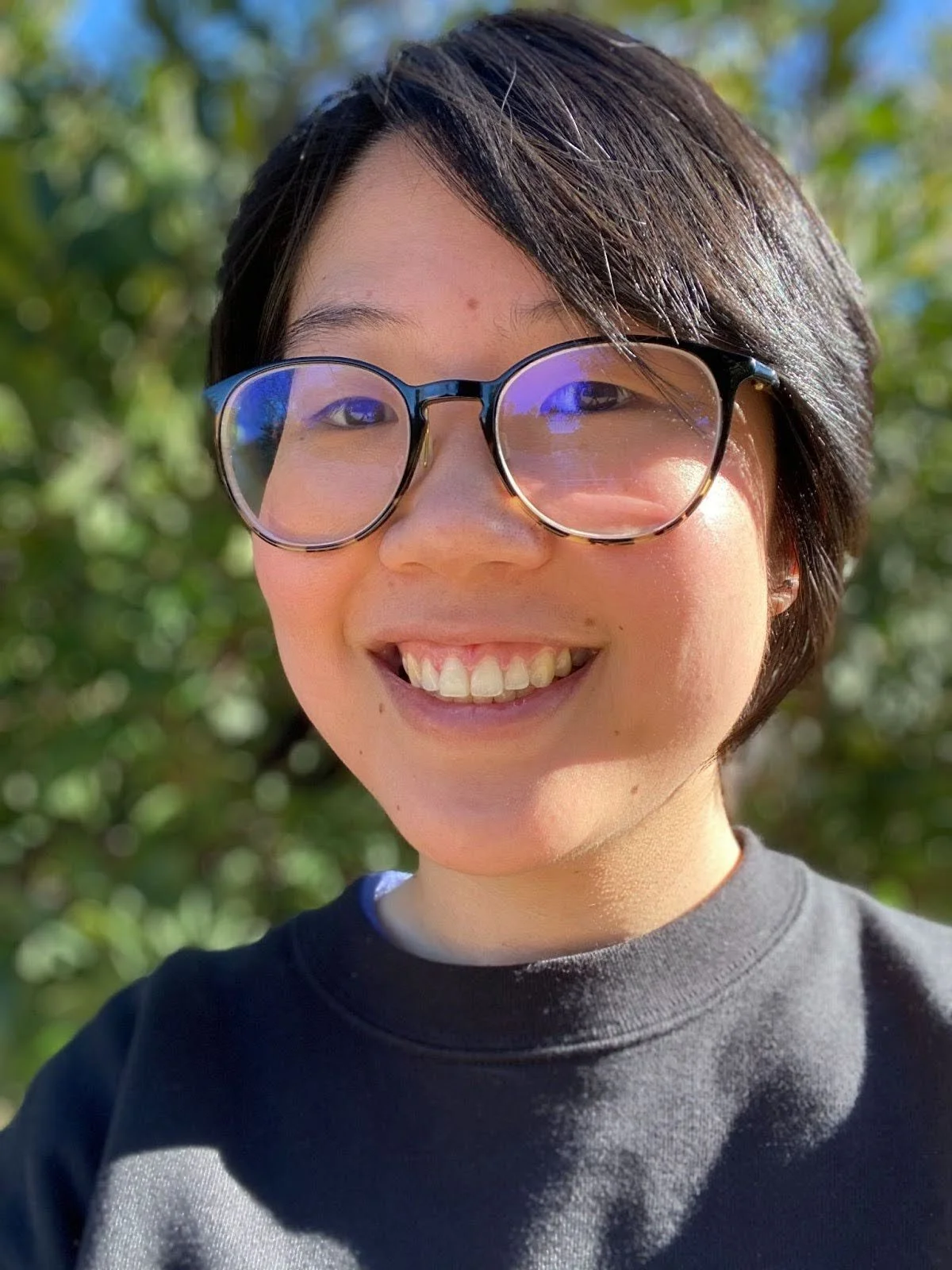
When I began working as an intern for Split Lip, one of the first names mentioned to me was Tina S. Zhu. I was well aware of the abundant talent and creativity of the staff here at the magazine, and reading Tina’s work only confirmed that—her ambitious short fiction especially demonstrates how much a writer can convey with very few words.
Tina writes from New York and is an Assistant Fiction Editor at Split Lip Magazine. She also co-edits WYRMHOLE, the terminally online speculative fiction newsletter. Tina’s work has been featured in numerous publications, including Lightspeed, The Cincinnati Review, Best Small Fictions, and The Crawling Moon: Queer Tales of Inescapable Dread (Neon Hemlock Press, 2024), which was a finalist for the Shirley Jackson Award. Her work has received support from Lambda Literary and the Clarion Writers’ Workshop. I encourage you to explore her writing at tinaszhu.com.
We talked over email about her career as both a writer and editor, her love for the Gothic genre, and her upcoming novel.
Ethan Lam: In addition to being the Assistant Fiction Editor here at Split Lip Magazine, I hear you also work for the editorial team at the WYRMHOLE, a publication that specializes in speculative fiction. Do you prefer writing or editing more? Are there any insights that you have gained from working as an editor that you can apply to your own writing?
Tina Zhu: Yes, I’ve absolutely learned a lot from editing and reading slush for different literary magazines. Reading these stories, whether it’s published stories to recommend for WYRMHOLE or unpublished submitted stories for Split Lip, has helped me figure out what works and doesn’t in my own writing and my aesthetic tastes as a reader and a writer. I highly recommend it for all writers. I think the joys of writing versus editing are different. With editing, when you find an incredible story in the slush pile, being able to share it with the world is an amazing feeling. I consider myself a writer at the end of the day, but being on the editorial side has been fulfilling and educational.
EL: As I was perusing your website, I came across your flash fiction “Heads,” which I found both delightful and intriguing. I couldn’t help but notice the lack of periods and how the entire flash was a single run-on sentence. What made you employ this stylistic choice? How does a writer know when it is appropriate to break convention?
TZ: I think I do my best work in short fiction by putting Oulipian-like constraints on myself while drafting. When I was writing “Heads,” I was trying to challenge myself to write a story that is a single sentence. I consider myself a form-driven writer—I have to know what shape something will take before I start, or else I’ll just flop around aimlessly like a fish on land and end up with a mess of a story. I like to write stories that blur or break boundaries, whether it’s in breaking the rules of the real world with speculative fiction or not using standard prose narrative form. I don’t think there’s an objective criteria out there for when to break rules, just whatever gets your story to the finish line.
EL: Interesting. You mentioned that you like to impose constraints on yourself when writing. Do you remember what the most challenging criterion you had to meet was?
TZ: The most challenging was "How I ________ Your Mother", which I wrote as my response to fairy tales like Snow White, Sleeping Beauty, The Swan Brothers, etc. I originally envisioned the story like a Mad Libs with parts of speech for each blank, but I couldn’t get it to work. I had to redo it a couple times before figuring out through trial and error that blanks worked better. They leave more up to the reader to fill in.
EL: Moving on, I hear you have an affinity for the Gothic genre, among others. Why is this genre so appealing to you?
TZ: I’ve always loved ghost stories, and the haunted house is a common type of ghost story you see in the wild. When I was in high school, my family lived in a creaky house in the south that overlooked what looked a lot liked what I imagined the moors in Wuthering Heights while surrounded by all these small-town dramas that make me wonder why Southern Chinese American Gothic isn’t a real fiction genre yet. Someday I'd love to write the great Southern Chinese American Gothic novel, if I ever get the chance! Given my background, it's no wonder that when I started writing fiction, I was pulled towards these stories where the past comes back to life and drags the protagonists down with it.
EL: In your flash fiction “Fried Rice,” featured in The Cincinnati Review, what made you decide to include supernatural elements while touching upon the Asian American experience?
TZ: I enjoy writing the kind of speculative fiction where the speculative element is a metaphor for a real-world experience. For this story in particular, I actually was trying to write a story that used as many words in a list I compiled that sounded pleasing to the ear, and once I started writing, I just followed where the story wanted to take me. More generally, the Asian American experience is the only experience I know firsthand. I'm a fan of the work of Shing Yin Khor, whose graphic novel The Legend of Auntie Po is a slice of pure Asian Americana. What is this weird hybrid thing we've collectively created that isn't the motherland or the rest of America? I aim to examine it through writing. Note that I'm just one data point, but I've found Asian American culture is more similar than different in otherwise very different parts of the country.
EL: Are you a fan of any other Asian American artists or authors?
TZ: So many! K-Ming Chang (a Split Lip contributor!), Alice Sola Kim, Alyssa Wong, Anthony Veasna So, Jasmine Sawers, Isabel J. Kim on the short fiction front, to name a few. Chen Chen’s poetry. Jhumpa Lahiri’s novel The Namesake made me cry hard the first time I read it—my parents gave me an unusual Chinese name with a backstory, like the protagonist Gogol, and reading it in college was the first time I felt seen in fiction. Tony Tulathimutte’s Rejection made me both howl with laughter and cringe in recognition in equal measure. The way Charles Yu plays with form has inspired me a lot. The full list is way too long, so I’ll leave it there.
EL: Finally, are there any details about your upcoming novel that you are willing to divulge?
TZ: I wrote an essay about fox spirits, “Tales of Tails,” inspired by the reading I have been doing while writing! I am superstitious enough that I don’t want to divulge more than there is a messed-up family and a fox spirit is involved.
–
Ethan Lam is an undergraduate currently pursuing English at the University of California, Berkeley. He works as an intern for Split Lip, writing short stories and poetry in his spare time. Beyond writing, he is a calisthenics athlete.